There are two entrances to the house, the front door leading to the study and a second entrance found at the back of the house, opening to a spacious and bright entrance hall painted ‘Loft White’ by Little Greene with period terracotta tiles underfoot. The original fireplace serves as a smart log store, and there is a convenient WC tucked away under the stairs leading to the first floor.
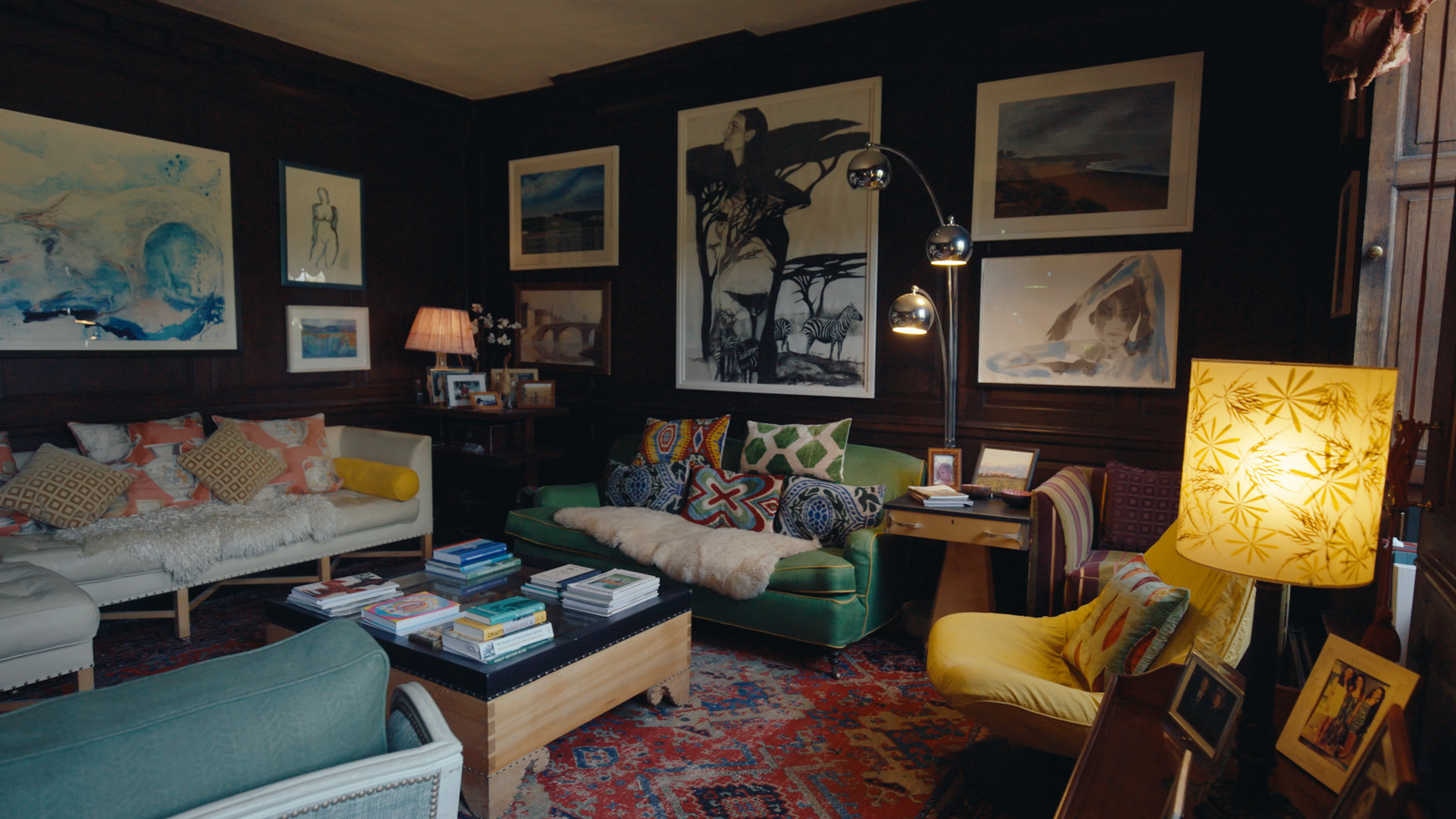
Several rooms lead off the entrance hall. The study, at the front of the plan, has a door leading out to the front garden. The room is painted a deep shade of ‘Mole’s Breath’ by Farrow and Ball; light pours in through a broad window in a deep-set alcove, illuminating the warm oak flooring underfoot. An original fireplace has been transformed into the perfect display area.
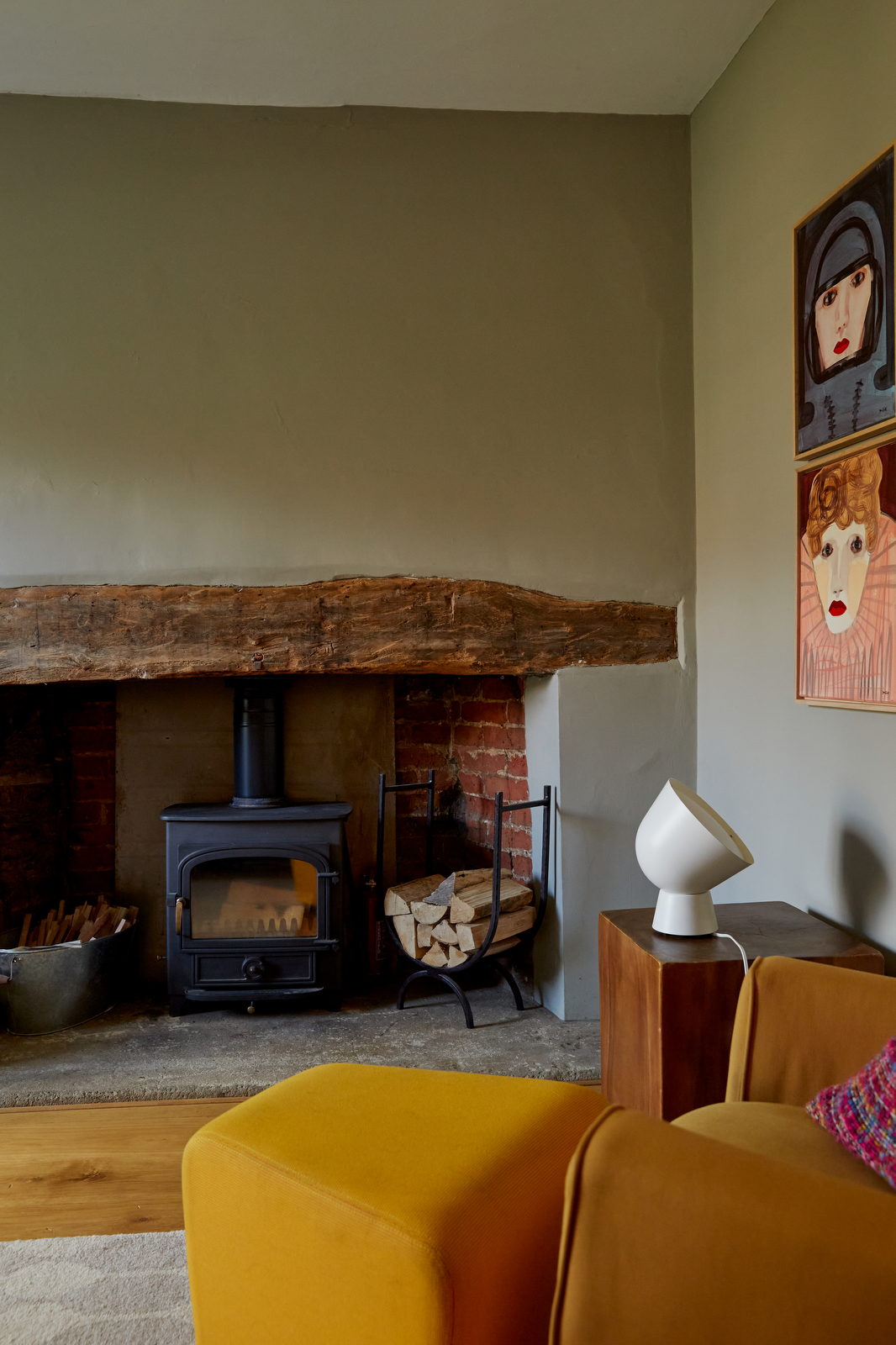
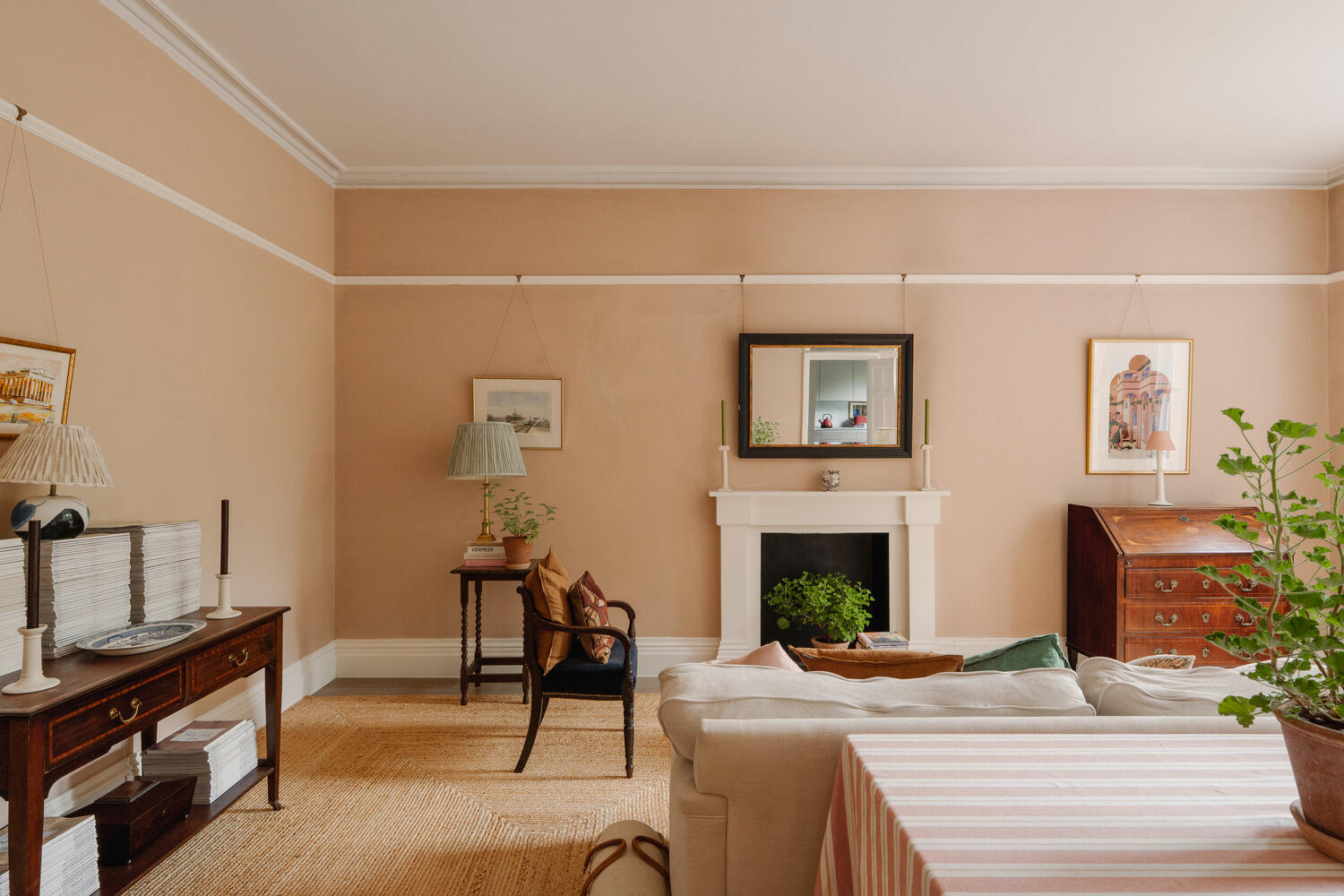
A large reception room also leads off the entrance hall, painted the same shade of ‘Loft White’; period oak plank flooring extends through the space. A working wood burner set over a wide flagstone hearth is the focus of the room, with two deep-set windows on either side, the perfect nooks to display books, art and other items. A door conceals a second staircase leading from this room to the first floor, with a good-sized storage cupboard tucked below. One end of the reception room is a dedicated dining area with space for a large dining table. Here, a small alcove has been completed with built-in shelves set above an ingenious wine rack.
The snug leads off the reception room towards the front of the plan. This room also has a door leading to the front garden, which the current owners have cleverly hidden behind a bookcase to create a cosier space. The snug is painted a rich and chalky shade of ‘Hardwick White’ by Farrow and Ball, which is complemented by the natural tones of the oak floor and wide inglenook fireplace, composed of timber, brick and flagstone, fitted with a working wood burner.
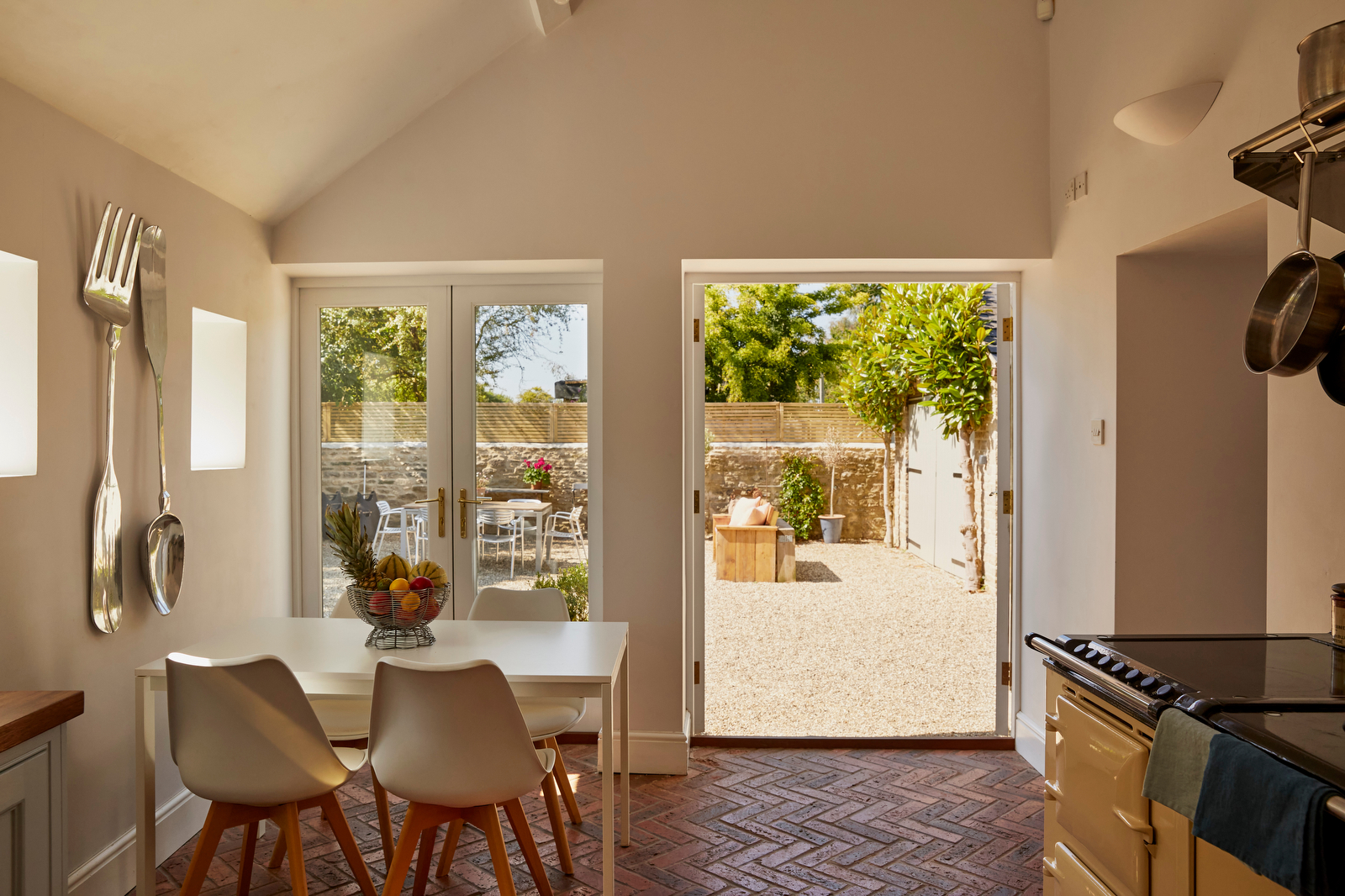
The large family kitchen also leads off the reception room. An integrated dual fuel (oil and electric) aga in timeless cream and bespoke cabinetry, painted a charming shade of ‘Bone China Blue’ by Little Greene, meld beautifully with the light and colours from the garden just outside, visible through several deep-set windows and two sets of French doors. The cabinets are completed with solid mahogany worktops, while reclaimed brick pavers cover the floor. Useful open shelves and hanging racks provide plenty of handy storage, and the refrigerator fits neatly into an alcove, preserving valuable floor space.
The matching staircases in the entrance hall and reception room lead up to a landing on the first floor, from which each of the four bedrooms can be accessed. Two bedrooms fall to the front of the plan, with original fireplaces, and excellent views over the front garden. The two bedrooms opposite look out to fields on one side and the village on the other. Each also have an original fireplace and an en suite bathroom. All four bedrooms have deep pile carpet, and the two bathrooms are finished with floors painted the same hue, ‘Mid Lead’ by Little Greene, as the staircases.
The Great Outdoors
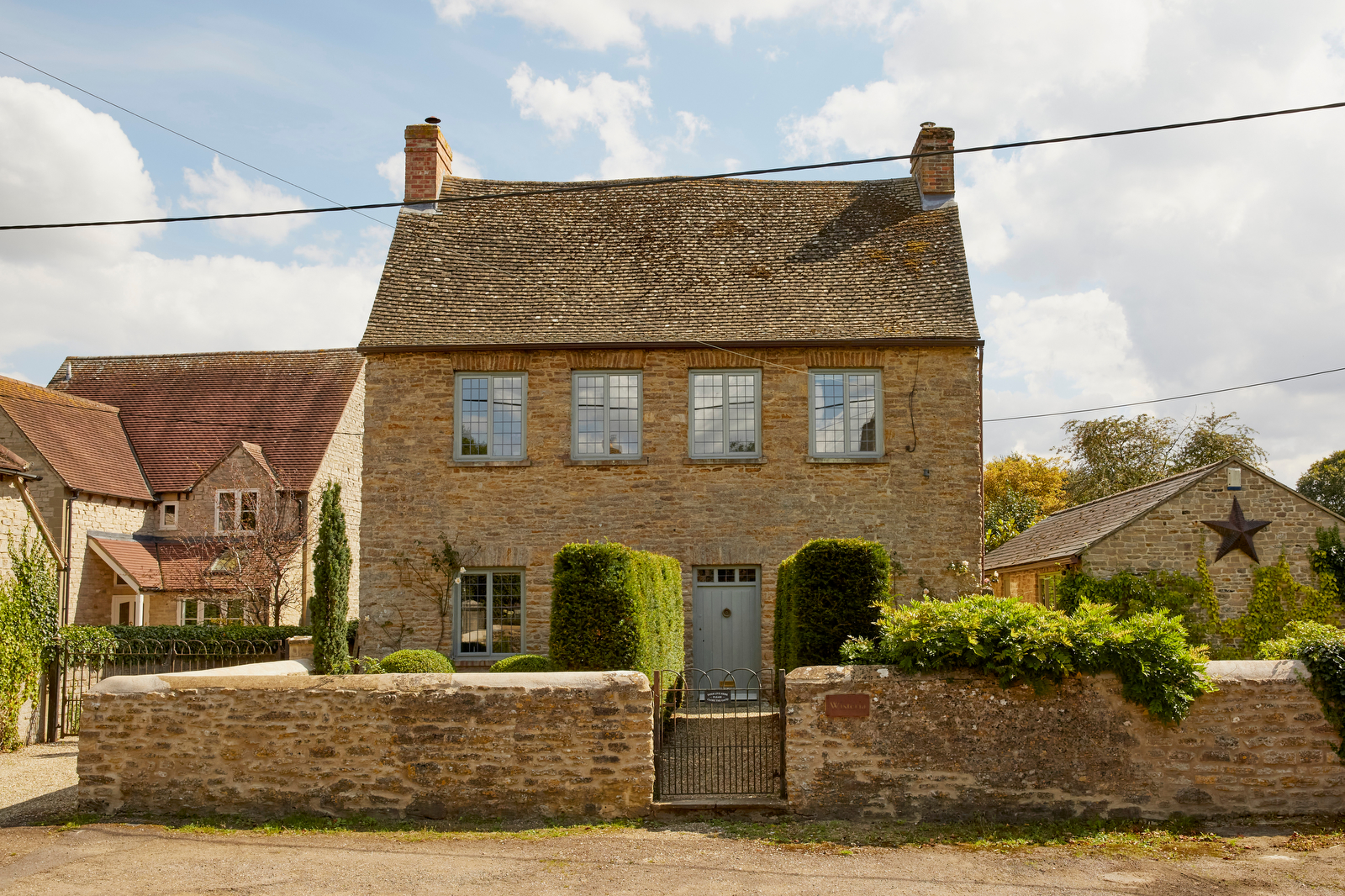
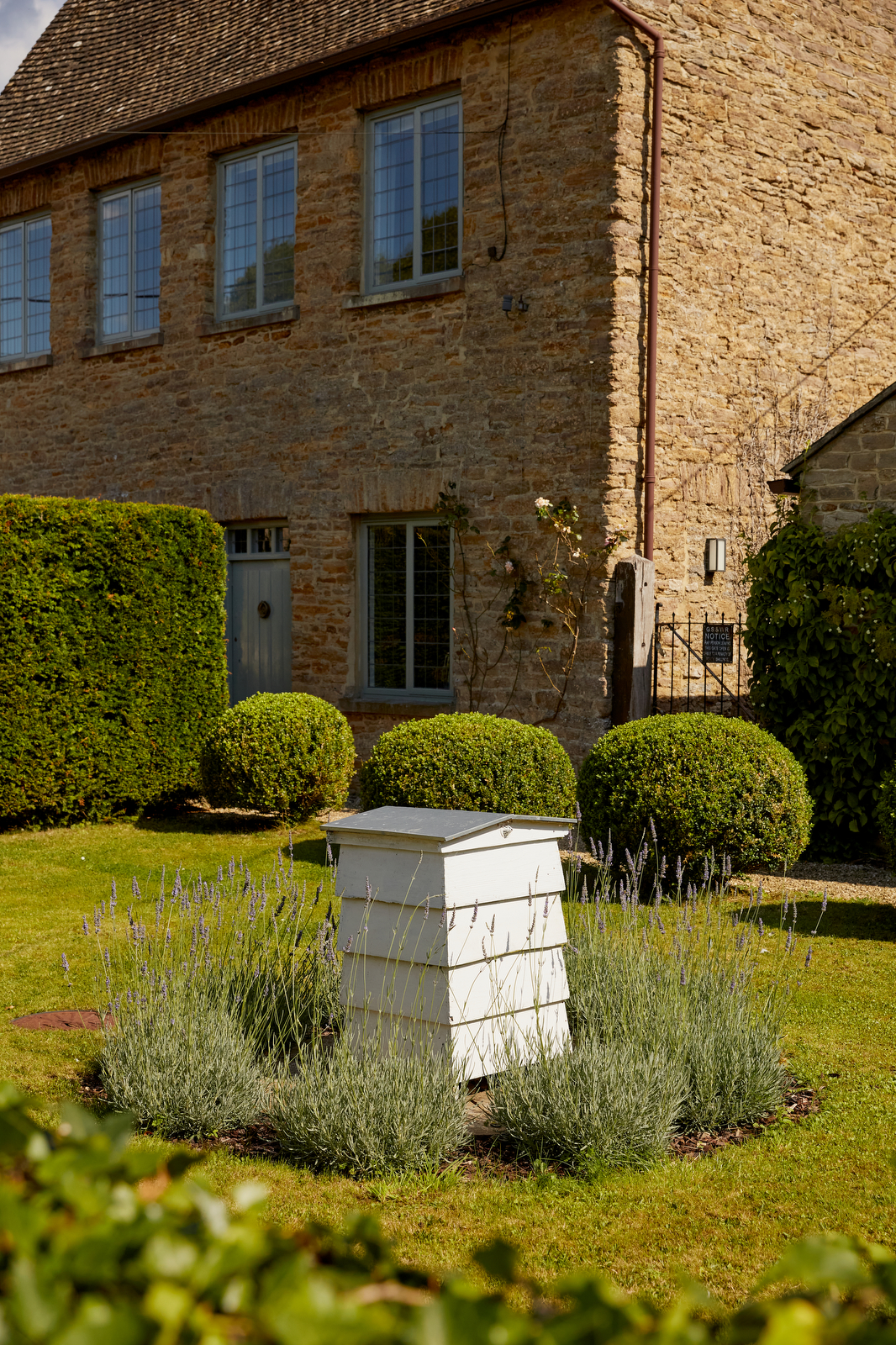
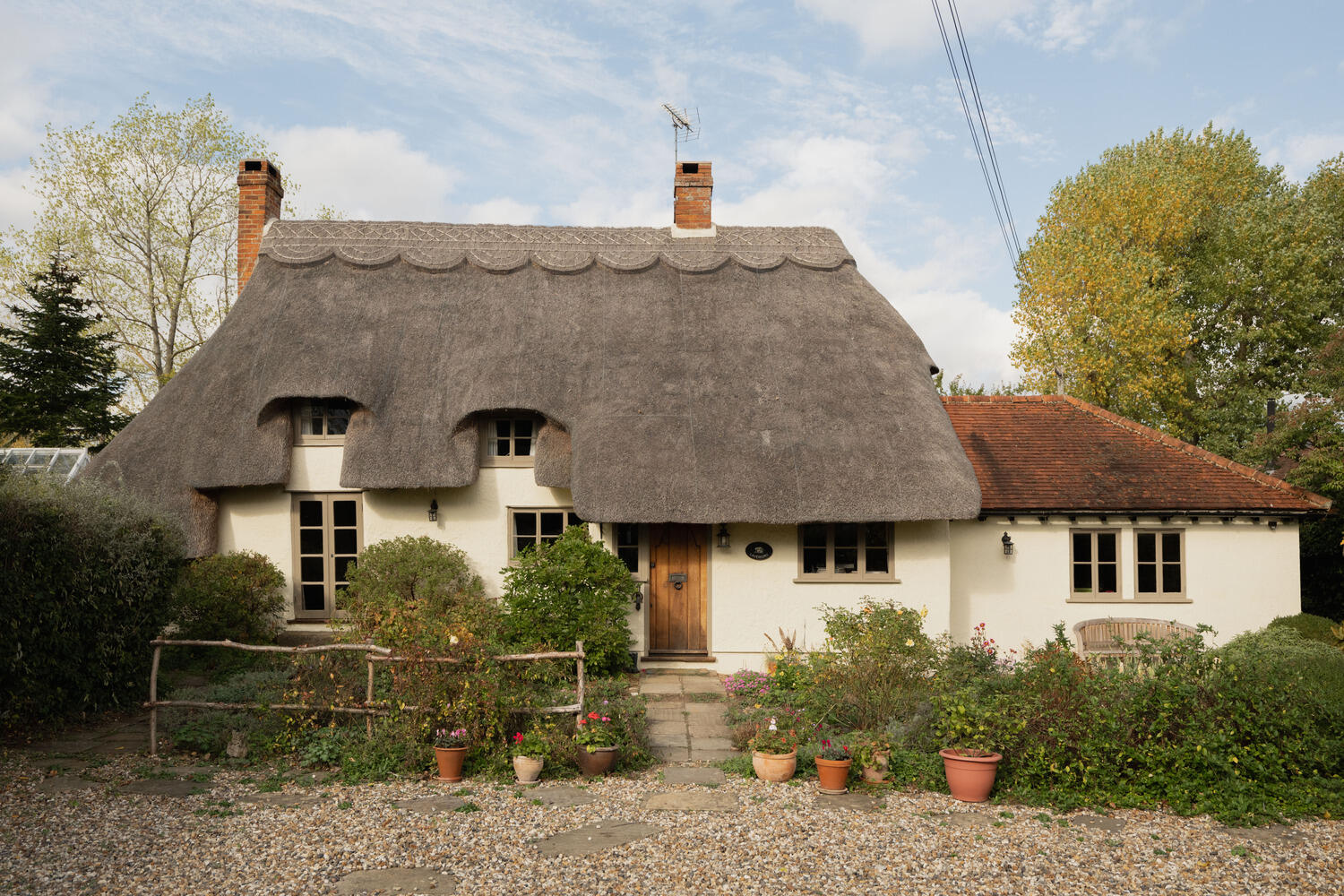
A lovely rubble-stone walled garden runs along the curtilage to the front of the house, where yew hedges line the gravel path that leads to one of the main entrances. Sweet-smelling lavender attracts a variety of pollinators around the ornamental apiary. To the left of the house is a private gated gravel driveway, providing secure off-street parking for several vehicles and access to the back of the house and workshop. A gravel path to the right leads between the house and a 532 sq ft workshop, built from honey-coloured local stone, which is framed by elegant Southern Magnolia trees shaped into an arch. There is planning permission in place to convert this workshop into self-contained accommodation.
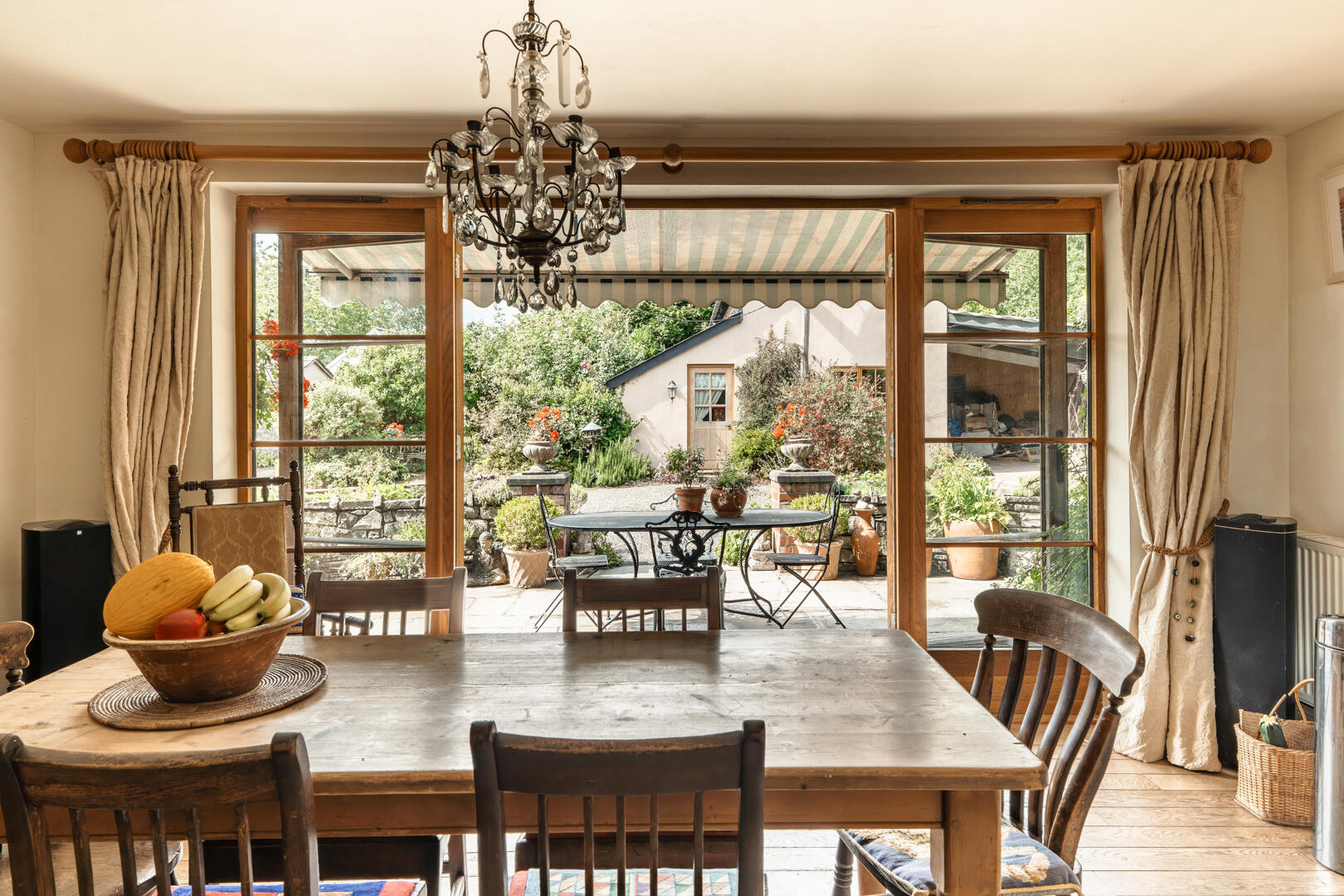
This path continues to a spacious gravel courtyard area that wraps around the side and rear of the house, with double French doors opening directly from the kitchen. There is ample space here for distinct dining and sitting areas; soft honey and sage tones give the space a Mediterranean feel. The rubble-stone wall provides a charming border and is topped with privacy fencing for added seclusion.
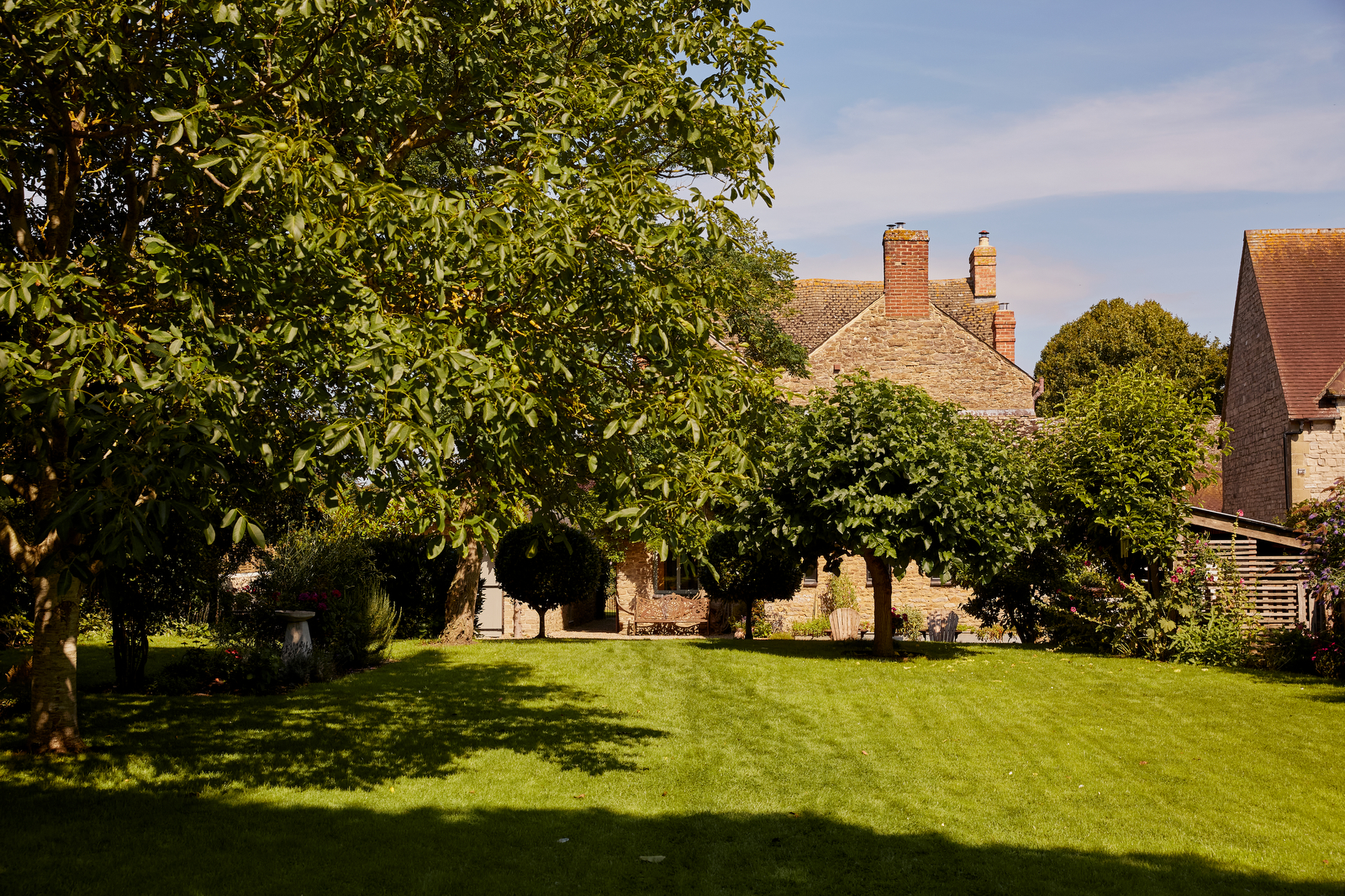
The rest of the expansive south-facing garden is laid mostly to lawn with specimen trees including walnut, acacia, horse chestnut, bay, mulberry, magnolia and apple providing dappled shade; flourishing herbaceous borders are planted with hydrangeas, roses, rosemary, poppies and salvias, among others. Timber fencing runs along the border to keep children and pets safe. It backs onto further fields and woodland, creating a truly pastoral retreat. Towards the centre of the garden is a stable that has been fully wired and could easily be used as a home office. Other outbuildings include a rustic greenhouse and a large shed for storing gardening supplies and equipment, providing plenty of practical and flexible outdoor space.
Out and About
Wisteria House is located in the idyllic hamlet of Littleworth and is surrounded by its verdant conservation area. It’s a sociable community, hosting activities all year round such as local coffee get-togethers, pop-up pubs, whist drives and an annual country fair. The award-winning Indian restaurant The Snooty Mehmaan is just a short walk away and is extremely popular with locals. Also in the vicinity are well-kept playing fields and a children’s playground.
It’s only a five minute drive to Faringdon, where myriad other amenities can be found. The town has a large selection of restaurants and grocery stores, including Tesco, Aldi and Waitrose.
Opportunities for recreation are endless. Faringdon has a leisure centre, rugby club, and cycle park, while Abingdon, Frilford Heath, Witney and Burford all have golf courses. Walkers and runners can enjoy the Thames Path and there are plenty of on/off road options for cyclists. For wild swimmers, sailors and other aquatic sports enthusiasts, the nearby River Thames, Cotswold Water Park and Farmoor Reservoir offer excellent opportunities to get in or on the water.
There are also delightful local country pubs including The Lamb at Buckland, The Double Red Duke at Clanfield, The Bell at Langford and The Plough at Kelmscott. The Fleur de Lys Bampton has also recently opened to great reviews. Blake’s in Clanfield is a popular lunch spot known for excellent sourdough, and Mollie’s Diner has also become something of a destination.
Oxfordshire is renowned for its schools and there is a fantastic selection nearby, including St Hugh’s School (approximately one mile), Cokethorpe and Abingdon. Within Oxford, there is St Edward’s School, Radley College, The Dragon School, Cothill House, and Oxford High School.
Transport links are excellent: the M40 and M4 have great access through the A34, and regular buses go into Oxford via the A420. Parking at Didcot Parkway is easy, and from there Paddington is just 35 minutes.
Council Tax Band: F


 Related Stories