Entry to the home is via its gabled entrance porch, surrounded by fragrant climbing roses. The porch doubles as a handy boot room and wind-break and is glazed on each side by awning windows. From the porch, an elegant staircase hall unfolds. Handsome, locally reclaimed parquet runs underfoot, here, and throughout the ground floor. Walls have been restored with sympathetic lime plaster to aid breathability; this has been paired with chalky
Bauwerk lime paint finishes, adding a dash of texture throughout.
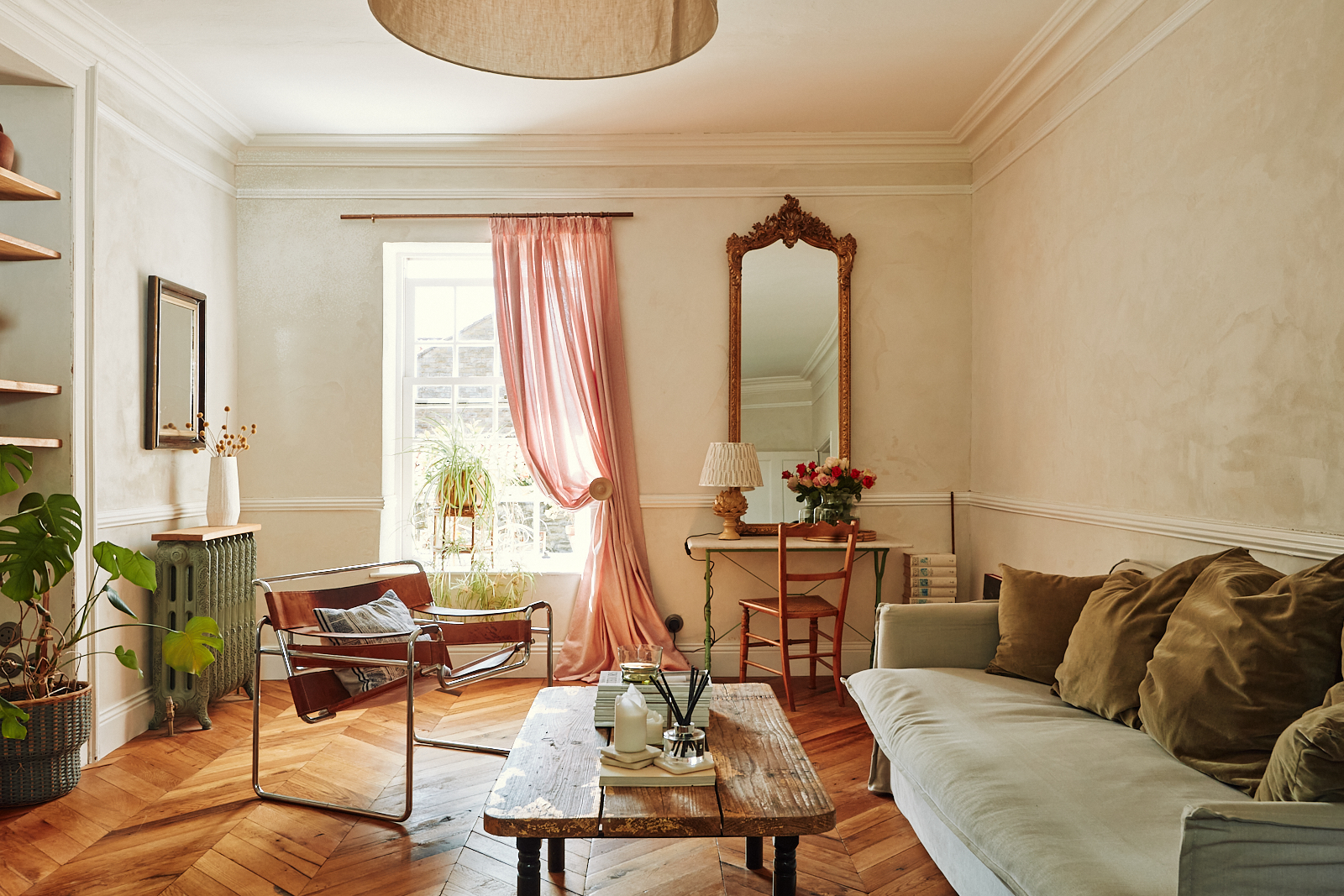
To the left of the plan, on the ground floor, is a large, dual-aspect drawing room. Bathed in natural light from two sash windows overlooking the front and rear of the house, the airy atmosphere in the room is elevated by its neutral, lime-washed walls. Shelving has been built into the alcoves on either side of an open fireplace with a working wood-burning stove. Classic antique radiators are found here and throughout the ground floor.
Adjacent to the drawing room is a large dining room, where a Yorkshire stone fireplace grounds the space and a vast sash window has its original working shutters. A private study is next to the dining room, currently used as a music room. This versatile space is defined by its peaceful atmosphere, ideal for focusing on work or creative pursuits. With its tranquil aspect, the study has a lovely view overlooking the side return of the house.
At the rear of the house is an elegant kitchen. The bespoke
DeVol kitchen cabinetry, crafted from birch ply, has been painted in ‘Mud Lark’ by
Dulux Heritage. Tiles by
Original Style form a handsome splashback, complementing the Silestone worktop—a practical run of shelving lines the main wall near the stove, creating plenty of storage. The walls have been finished in Venetian plaster, and the current owner has incorporated hardy tiled flooring, which pays homage to the home’s Georgian origins. Adjacent to the kitchen is a convenient rear entrance leading to a useful boot room, which further connects to a WC featuring a vanity.
On the first floor, the dedication to the meticulous restoration of the house is immediately obvious. The original timber staircase has been enhanced with handcrafted iron spindles, seamlessly blending modern elements with the home’s historic character, while walls have been stripped back to their original, lime plaster.
At the front of the plan is the primary bedroom, where shelving has been added to the arched alcoves complementing plaster cornicing. In its large en suite bathroom, walls are covered in off-white tadelakt plaster and dove grey tiles, offset by traditional fittings, including an elevated cistern toilet, vanity, and shower unit.
There are three more generously proportioned bedrooms on this floor, each with individual views of the front, rear, or side of the house, and a large family bathroom is complete with a vanity and bath. Next door, a separate WC has ‘Obsidian Green’ tiles and is adorned with a pretty botanic wallpaper by William Morris.
The Great Outdoors
A pretty front garden is bordered by a row of elegant cast-iron railings. Well-established roses, ferns and camellia line the borders, enhancing the natural beauty of the surroundings. The front entrance porch is enveloped by the sweet fragrance of climbing roses, creating a lovely welcome.
On the side return, a picturesque wildflower garden has been carefully cultivated and is a haven for local wildlife. This enchanting space introduces vibrant splashes of colour, beautifully contrasting against the surrounding privet hedge. A large driveway provides convenient off-street parking for two to three cars, while a two-car garage adjoins the house.
Out and About
Ampleforth is a village that offers a wide range of services and amenities. Despite its small size, it has two pubs, namely
The White Horse Inn and
White Swan, and a tea room and restaurant. Other conveniences include a post office, village shop, GP surgery, and a highly regarded primary and secondary school. The village is also home to Ampleforth Abbey, which is on the doorstep. The abbey operates one of the largest commercial orchards in Northern England, cultivating over 50 apple varieties for their own fresh juice and cider production.
A little further afield, the beautiful market town of Helmsley is a short drive away for extra amenities. It has a variety of independent shops, restaurants, tea rooms, and a medieval castle. Every Friday, a weekly market takes place in Helmsley. Additionally, Malton, known as Yorkshire’s food capital, is a 20-minute drive away. It has artisan food shops and highly regarded restaurants, making it a haven for foodies. Notably,
The Black Swan in Oldstead is a Michelin-starred restaurant and inn located near the beautiful ruins of Byland Abbey.
The wider area surrounding Ampleforth is awash with historical attractions, with notable sites including Nunnington Hall and Rievaulx Abbey, which are managed by the National Trust and English Heritage, respectively. Nature enthusiasts and hikers can explore the vibrant heather landscape in nearby areas like Goathland, Hutton-le-Hole, and Whitby, the inspiration for Bram Stoker’s ‘Dracula’.
Castle Howard, an expansive Baroque estate, is famous as the filming location for Brideshead Revisited. It hosts a variety of events throughout the year, ranging from open-air cinema screenings to festive experiences such as ‘Christmas with Father Christmas’, where the rooms of the main house are adorned with theatrical installations.
With a 35-minute drive to York, residents of Ampleforth enjoy easy access to the city. From York, fast and convenient travel to London is possible, with a journey to Kings Cross taking under two hours. This accessibility allows for seamless connections to the capital and beyond.
Council Tax Band: F






 Related Stories