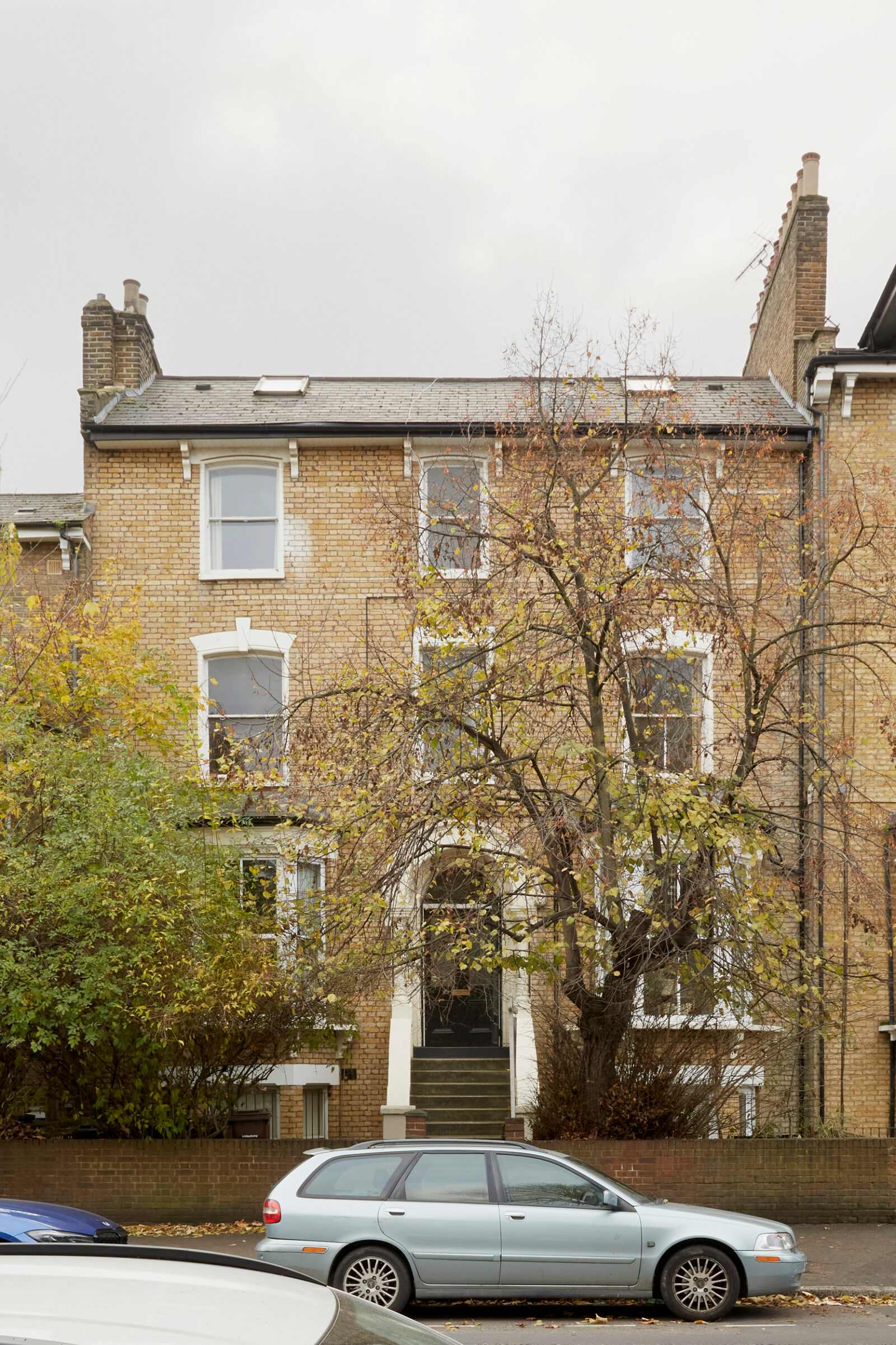
Access to the apartment is gained via a shared front garden with a mature lime tree and steps leading to the front door. The entrance to the building is to a communal hallway, where an internal flight of stairs leads to the apartment, as well as to a small independent space located directly outside the apartment with separate access. Currently used as storage, this neat space could also be used as a cosy office.
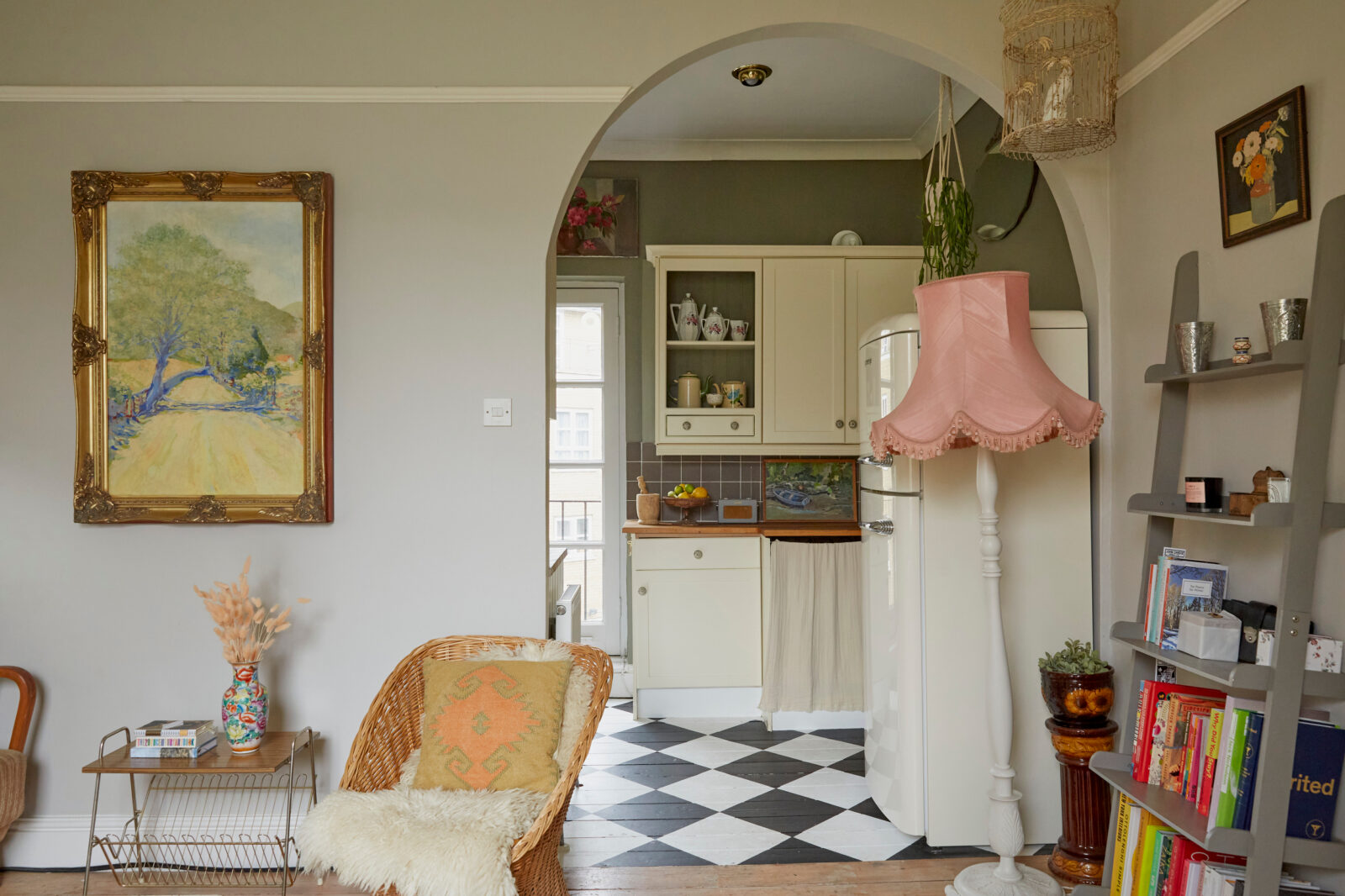
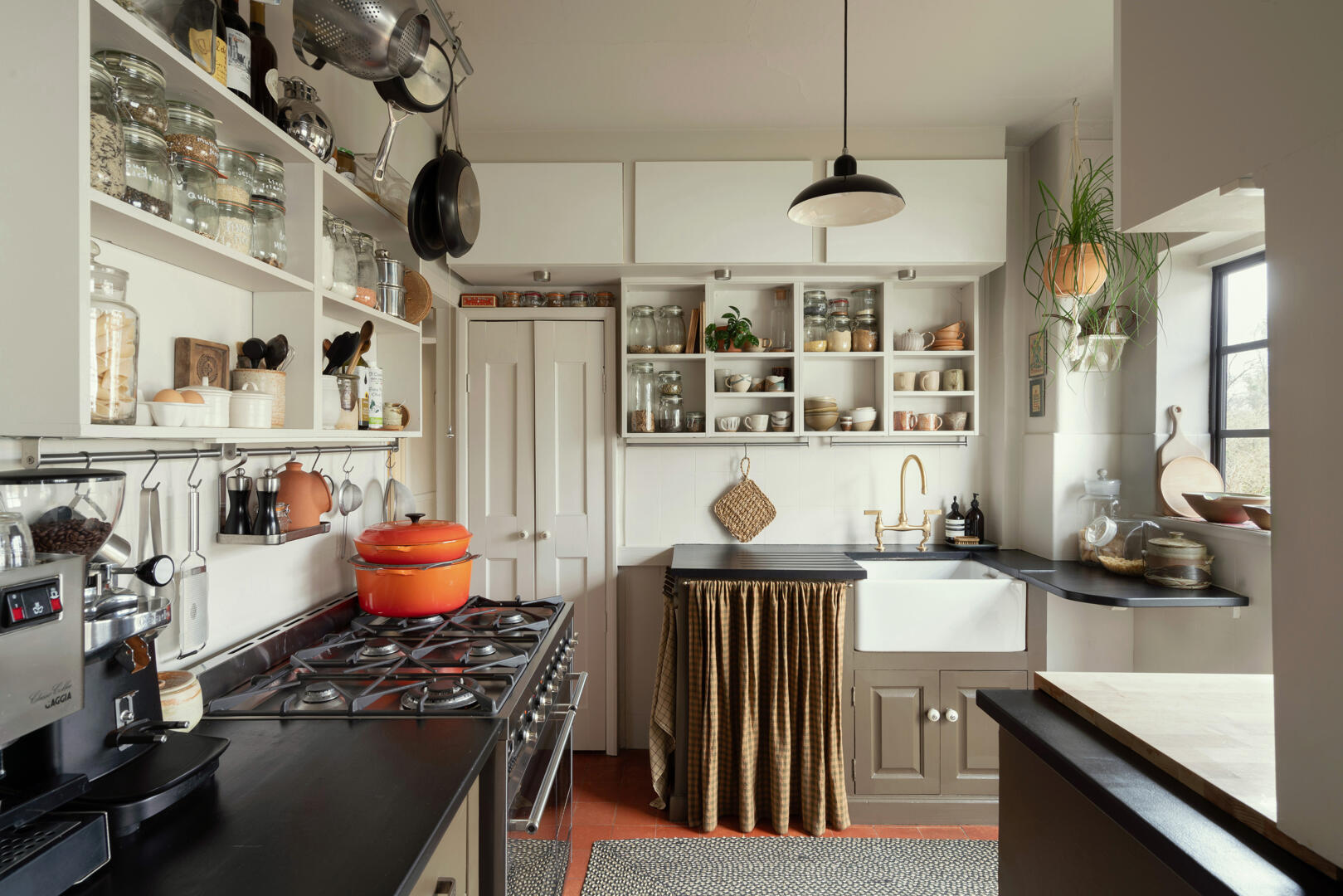
The apartment opens into an airy central hallway with mint green walls and playful pink dado rails. To the right, a spacious living room overlooks the front garden through large sash windows; original floorboards run underfoot adding warmth and texture. Painted in mellow neutral tones with the picture rail and crown moulding accented in bright white, the room has a restful feel. The kitchen is tucked away at the rear of the plan. Here, the floorboards have been painted in a striking black-and-white chevron pattern. Built-in cabinetry is painted in creamy tones, and a chunky wooden worktop adds a rustic charm. French doors with a Juliet balcony allow evening light to flood the room.
A large bathroom, painted in the striking green hues is at the front of the plan. Here, a bath sits underneath a large sash window, which overlooks the shared garden below and illuminates the room. White subway tiles reflect light and contrast with the moody wall colour. Chrome bath fittings lend a traditional feel to the charming room.
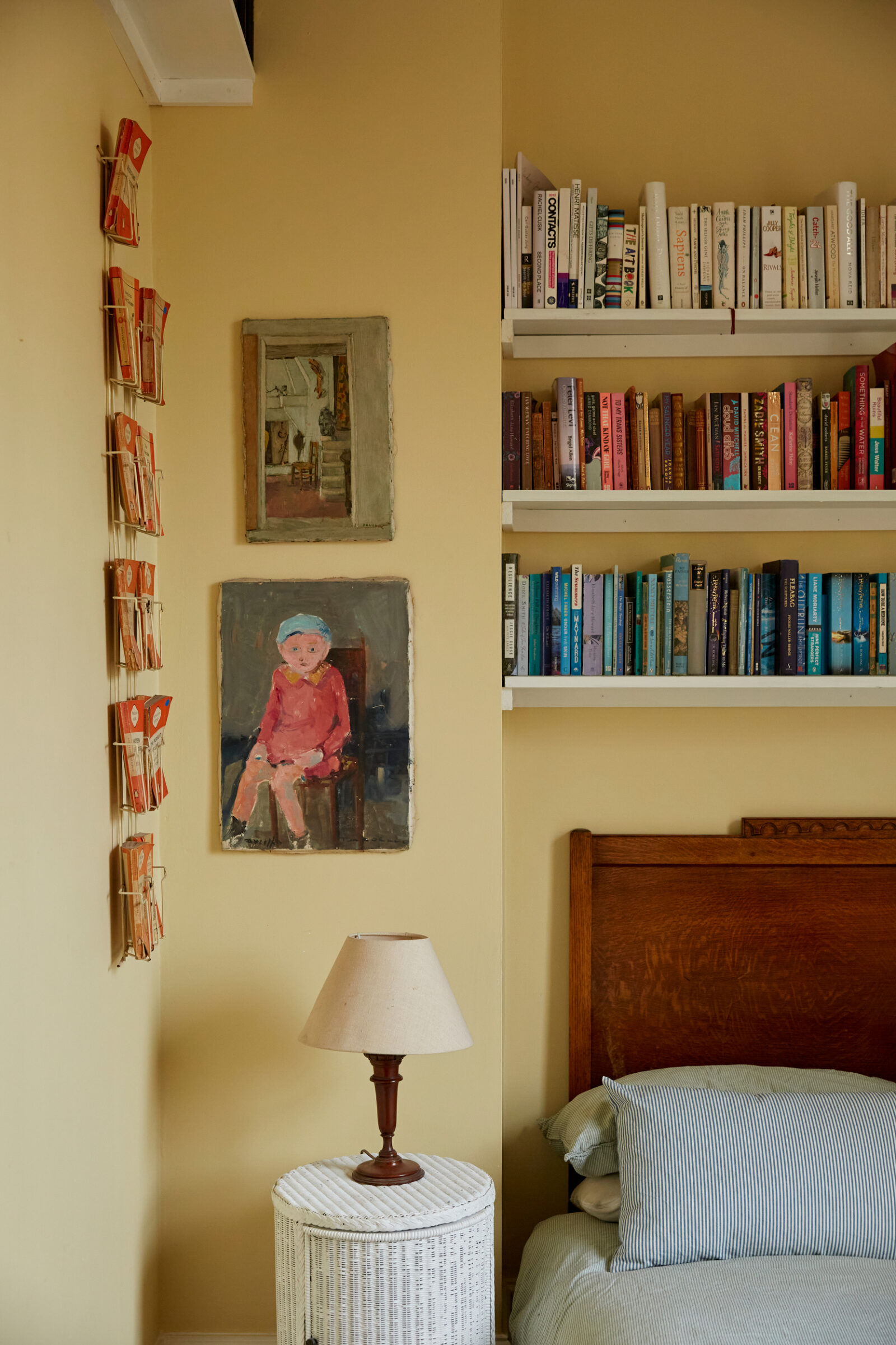
Further down the hall are two bedrooms. The bedroom at the front of the plan, painted in peaceful warm shades, has an internal fan light and a large original sash window meaning it has an exceptional quality of light. Built-in shelves run the length of the room, perfect for storing books. The welcoming main bedroom lies to the rear of the plan and is painted in soothing rosy tones. With built-in bookshelves, this room also has a Juliet balcony, which flanks a large sash window.
The Great Outdoors
A small communal garden lies at the front and is the perfect place to enjoy an evening drink in fine weather. A large lime tree with white blossom in summer frames the façade and several other mature shrubs, giving the building a private, secluded feel.
Out and About
The house is located in central Hackney, just east of Dalston, west of bustling Mare Street, and close to the green spaces of Victoria Park and the Regent’s Canal path. There are many fantastic restaurants locally, notably Lardo on Richmond Road, the recently opened Angelina’s on Dalston Lane, and Pidgin and Violet on Wilton Way. Weekly markets take place at Victoria Park and Well Street, and Broadway Market has a reputation for excellent places to eat and drink and hosts a food market on Saturdays. The E5 Bakehouse, on the edge of London Fields, is excellent for freshly baked artisan bread and grains.
Amhurst Road is a short walk from Dalston Kingsland, Hackney Downs and Hackney Central stations. Hackney Central runs direct services to Stratford and, Highbury & Islington on the London Overground, whilst London Fields also offers direct trains to Liverpool Street. Bethnal Green Underground station, easily accessible by bus, has excellent links to central London via the Central Line.
Tenure: Share of Freehold
Lease Length: approx. 98 years remaining
Service Charge: approx. £1,442 pa
Council Tax Band: C



 Related Stories